Years ago, I heard a fiery Pentecostal Preacher give a message on belonging, diversity, inclusion, and equity. He talked about the fish Peter, James, and John caught before they went follow Jesus. Scholars speculate there were several species of fish captured in the net given the climate and location of the waters. I was fascinated how this Preacher described and related the diversity of fish to the diversity of people’s mannerisms and behaviors. He went on to say oftentimes when diverse groups of people are brought into spaces, there is a piercing question all of them ask. The question is, “Is there a place for me here?”
Wherever you are at the time of reading this email, you may be wondering the same.
“Is there a place for me at this job?”
“Is there a place for me in this relationship?”
“Is there a place for me in this industry?”
“Is there a place for me in this family?”
“Is there a place for me in this friendship?”
Wherever you may find yourself wondering, know this: you belong. The fact that you are asking this question shows that you are giving expression to the timeless wonder within you. From your knowing that you belong, you can create – even curate – spaces for yourself where you are not only nurtured, but you provide nurturance for others.
The Power to Create
One of the features of the distressed mind is to keep us in a feedback loop of questioning that seeks solutions. But the solutions are found outside of the loop.
When you feel yourself in that loop, step into your ability to ask questions that help you exit the loop. My main question to help me exit is, “How long do I want to be here?” From there, solutions arise in the melodies, the silence, the courage, the stillness, the inhales and exhales between tears, the wind, and in rest.
One thing all children and teens need to grow into their most optimal and holistically healthy selves is a sense of physical safety that resonates as inner security. Decades of child development research, positive psychology, and neuroscience research support this truth. The journey to inner security is often characterized as “coming home to ourselves;” “creating home within us;” or “finding home within us.” For children, the development of home within starts in their physical environments. As they learn they are safe to feel, safe to speak, safe to play, and safe to rest, they develop an inner security that serves as neurophysiological basis for healthy self-concept and healthy self-esteem. Inner safety simply means we are good on the inside. And as loving and caring adults, we want our children to be good on the inside.
“Inner safety means we are good on the inside. And as loving and caring adults, we want our children to be good on the inside.”
When children learn they are safe to feel, speak, play, learn, and fail, something changes for them and within them. They become surer of themselves. They test new ideas and even challenge us adults respectfully as they arrive at different points of view. Quite frankly, I enjoy seeing a child arrive at different perspectives and invite me to see things from different angles. It can be enjoyable and mentally expansive. But what happens when children feel so safe that they take their time getting started with a task or completing a task? What happens when they want to negotiate or explore different paths towards the same goal? I say, “If there is time, let them.” Whether you are professional working with children or an all-star parent working with your own, there are ways that we can help children reach their learning targets while being flexible. When there isn’t an abundance of time, we can create space for this type of learning. Here are the steps I take.
See the child in their beauty and wonder. Your student or child knows when you look at them with the eyes of awe and curiosity rather than impatience and concern. Nothing’s wrong with concern. But when coupled with impatience, we can leave psychological wounds over time.
Verbally acknowledge what you notice in your child’s emotional state. This lets them know that you see them and you are present with them. You can simply say, “Your feeling really relaxed. You’re feeling really safe. You’re feeling really silly. I see you.” Emotions are expressed through behavior. When we acknowledge the state, we can help them move through it towards the goal.
Tell them that even while they’re feeling relaxed, safe, and silly, there is job to be done and that they can do it. In fact, you are there to see them get it done because they indeed can do. If they need your assistance, you are there for that too. Relaxation, safety, and silliness are elevated emotions. This enables them to complete their tasks efficiently, as their emotional state supports effective job performance.
After acknowledging the child’s emotional state and expressing that the job or task must be done, watch them to see what they accomplish. The goal could be homework, cleaning, organizing, a game that supports executive function in the brain, or any less-preferred activity. Watch them to see what they accomplish towards the goal.
If the child is taking more time because they’re feeling very safe and silly, set a timer for getting started. Also, remind the child that there are other activities for you to do. But first, must-dos before want-tos. Must-dos before want-tos teach prioritization, which involves executive brain functions
Allow the child to offer some ideas for making the task or job more fun, if there is space it. Otherwise, set a timer and watch them work.
Be patient. Be observant. Reward them with your sincere validation of their efforts.
Celebrate a job done.
Reflect with the child on how they think they did. Also, ask them how feeling safe, silly, and relaxed helped them reach the goal. This type of reflection builds a healthy self-concept and memories as resources for getting things done.
With these 9 steps, you can enjoy your child or student more. You will also gain more insight into who they are as people and how they develop a sense of awe in you.
Do you have more questions about this topic? I’d be happy to answer your questions. Email me at ashley@risewhereyouare.com. Check out a video of this content on my YouTube channel.
I can’t tell you how many times I’ve gotten things wrong: names, pertinent pieces of information, my sense of direction, perceiving personality and relational dynamics, giving feedback, and making suggestions. You name it, I’ve gotten it wrong.
I’m learning however, that there is something Greater for us to discover when we second guess our answers to life’s opportunities. The Greater calls us beyond the second guessing and into the certainty of our faith.
Black Woman In The Berkshires
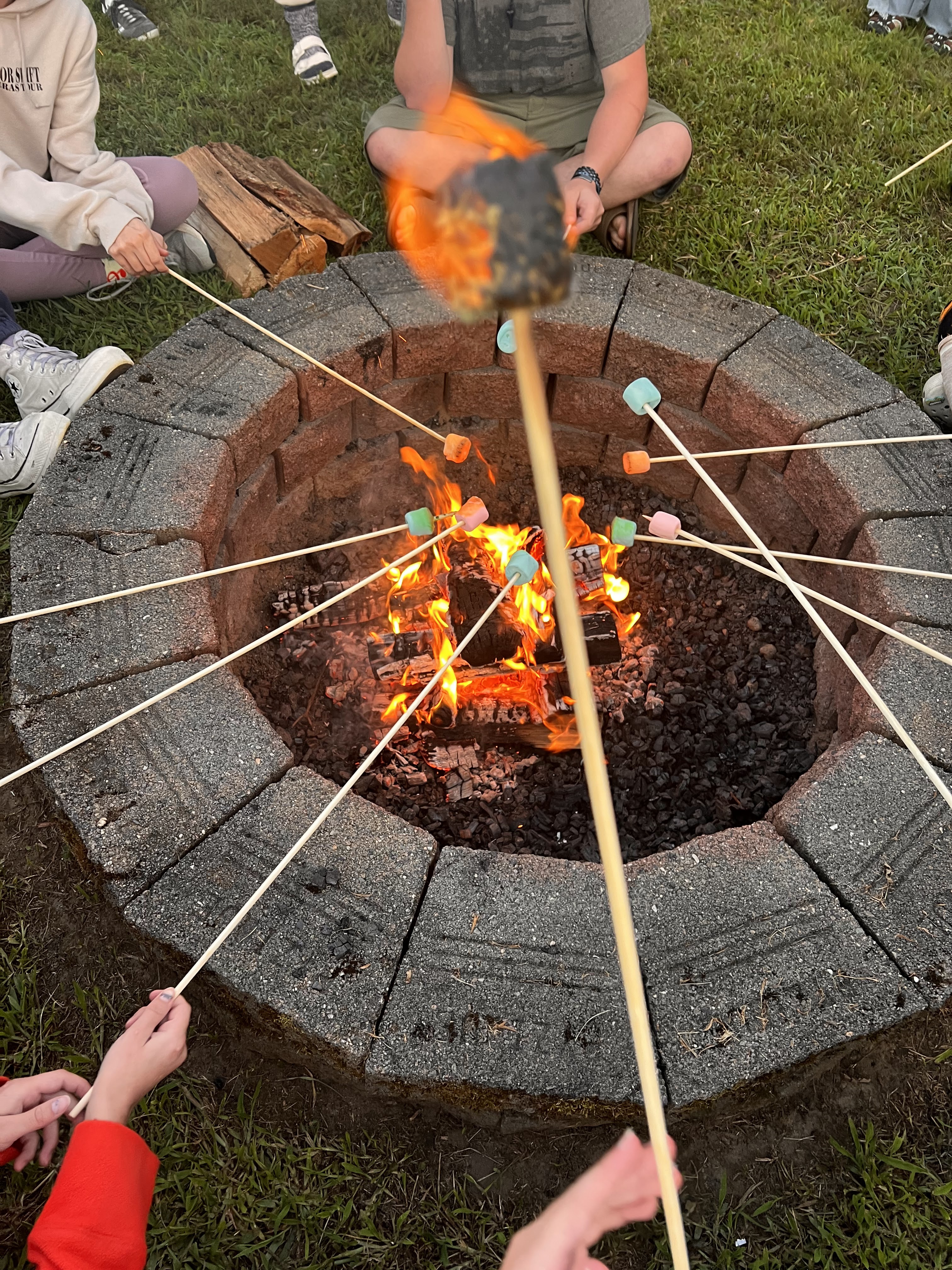
Recently, I traveled over 2,500 miles to the middle of the Berkshires in Massachusetts to support my third camp of the summer. I was confident that the ask to support was answered prayer. The opportunity itself, in my estimation, was a growth opportunity for the blessings the rest of the year holds. While I was there, however, I felt like an outsider. Not only had all of the campers been open heart surgery patients, all but one of them were White and were not accustomed to Black people in their environment.
Don’t get me wrong. They were warm in their welcome. But they didn’t know how to connect with me. Being accustomed to building rapport, I asked questioned and smiled softly as I listened for their responses. But it was a challenge. Sometimes the kids simply stared at me and would turn their face when I looked their way. When speaking to them, at times, they seemed not to hear my voice. Oh, it was a challenge. But a very valuable one at that.
With the growing feeling of being out of place, I had to hold on to the Greater reasons I was sent there. Soon enough, I found myself praying at new levels that required me to remember how temporal and precious life is. There is only so much we can do in the time we have. Yet, in the time we have, we must seek Wisdom and overcome our own limitations.
Even when people don’t know you or your mission, remember God does.
We can walk into some spaces and know automatically that we belong. I’ve felt that and it can feel so nourishing. We can walk into other spaces and doubt. But then we are proven wrong. That’s one of the best feelings. There’s something about walking into the spaces that tell us we don’t belong (in the way we think we should) and seeking God’s guidance on the last directive He gave us.
While I don’t suggest walking into every room to discover your sense of belonging, I do suggest staying open and obedient to the call of God on your life. With this type of alignment, He will take you on roads you have not traveled. He will nurture and sustain you with the unseen best the environment has to offer. And He does this because of Who He Is and His commitment to us in Him. He loves us when others are not interested in even knowing what there is to love about us. He loves us beyond measure and beyond words. As we lean on Him for our understanding, we experience the reality of being created in His image, recipients of grace, and carriers of His glory.
May you be encouraged today to stay true to the word He has given. May you see your prayers answered. May you recognize the authority He has given you and that with that authority, the universe as an environment responds.
Sometimes we want to convince people of their value with our words. But there is something even more powerful than convincing through words. Simply sitting with someone we love and care about is a beautiful way to convey our value for them.
To sit with someone is a form of presence that verifies the tenderness of our existence. It holds us in between our inhales and exhales. As we move through our uncertainties towards our victories, sitting with propels us forward – especially toward the meeting of our silent selves. The silent self, referred to for millennia by Ancient Teachers, Masters, and Mystics, is the self that exists beyond our thoughts and our emotions.
Connecting with our silent selves can expand our mental and physical capacities for wellbeing. It’s quite amazing.
Have you sat with a child lately?
Sitting with them in their moments of exuberant anticipation is just as harmonizing as sitting with them in their emotional distress. Sitting with is an ancient yet effective way to speak without speaking and rest without sleeping. It is a gift of presence that brings them back to their love-filled heart center. It is also divine.
You don’t need words to sit with that child you love. The words between you and them will arise in right time.
I was in third grade craving a Lunchable for my school field trip. I asked my mom. My mom told me to ask my dad. I asked my dad. My dad immediately began to question the concept of a Lunchable and why I “needed to have one.”
“But dad, everyone is going to have a Lunchable. I want one, too. I don’t want leftovers.”
“You’ll have a good lunch, mama. You don’t want barbeque chicken, macaroni and cheese, string beans, and potato salad?” Apparently, he was more excited about the leftovers than I was. He tried to convince me.
No, I said internally with a dazed and confused look on my face, dropping my shoulders.
“You’re not getting a Lunchable. You’re going to eat what I make you.”
I didn’t push the issue any further. He went on to criticize the concept of a Lunchable and how good I had it in comparison to him as a child.
Nearly 30 years later, I cannot tell you where my third-grade class went for our field trip. But what I can tell you is I thought having a Lunchable would give me the status I needed to be part of the ingroup.
I was still “the new girl.” But instead of experiencing the warmth of initial and sustained interest from the children, their friendships from kindergarten, first-, and second grade took priority. So, my school-based friendships were nearly nonexistent. I interpreted myself being on the outside looking in. Without a doubt, my third grader provides major insight on why I approach supporting children the way I do.
During lunch time on this day of the field trip, I sat by myself and took my lunch out of my backpack with a mixture of feeling hungry and dread for leftovers. Leftovers. I wanted to be in the in-crowd, sharing cheese and crackers, and opinions on the field trip. Instead, I examined my perspiring lunch in its to-go like container. I opened the container, gave it one last look, and then grabbed my spoon. I scooped a spoon full of macaroni and cheese and put it into my mouth. “Not bad I thought.” I took another bite and thought, “This is actually pretty good.” Then I went for the barbequed chicken. Then the string beans. Then the potato salad.
“This is really good,” I thought to myself. I was so happy to be eating good-tasting food.
When my dad picked me up at the end of the school day, I told him how delicious the food was; and I complimented him on his potato salad. He cooked everything, but I always enjoyed his potato salad with the special effect of just the right amount of paprika.
The day before, my dad attempted to talk me into understanding of why homecooked food was better than cheese and crackers with a cookie. But I couldn’t understand until I had my own experience. As the old adage goes, “Some things cannot be understood. They can only be experienced.”
Give thanks for the power of understanding that is transmitted through experience. This same power occurs to our children when they are simply eating and enjoying good homecooked food.
Have you ever thought this thought: “If I can just say the right thing at the right time, this child (or the student you love) would understand they have choices, and they’ll make a better choice?”
I’ve had this thought. It comes from a sincere place, good-hearted place. But it also comes from a place of urgency, panic, and fear. The tenderness of our desire to see our children (tweens and teens included) succeed is one that can fuel us into precise action. But if we seek to relieve ourselves of our fears, using children as an outlet for our words, we transmit seeds of emotional pain and unfulfilled longing. We call it sharing life lessons. It’s called lecturing. It could also be a verbal vehicle of displaced emotional pain.
Before you try to talk your child, student, or mentee into a place of understanding (i.e., lecture), ask yourself this simple question: What am I trying to accomplish for myself? You may be surprised to hear the answers to your own question. This process of reflection supports self-understanding, which helps you to offer understanding to your child.
Then ask yourself what your child/student/mentee will be able to accomplish after you attempt to talk to them into understanding? The goal here is to imagine the potential emotional outcome so you can receive spiritual insight on how to proceed before you proceed.
Some adults are trying to get kids to understand while failing to realize the more we talk, the less they hear us.
Some adults are trying to get kids to understand while failing to realize the more we talk, the less they hear us. This may further strengthen the child’s idea that they are not heard or understood.
Once you think about what you want to accomplish, I want you to ask yourself, “What can my child, student, mentee accomplish because I listened to them?” This is a life-changing question. You gain more insight when you listen and ask simple, powerful questions, rather than talk about your life and different things were. They also integrate different regions of their brain through recalling their life events, sharing them you, and gaining clarity.
As you focus on the positive emotional outcomes of your child being heard by you, imagine your student as an adult thanking you because you took time to be there for them emotionally. This is a beautiful sight to see. Simply let yourself bask in the positivity of this peaceful anticipation before having the next conversation. This level of positive mental absorption changes your energy before approaching your child. It also puts you in a higher place spiritually, mentally, and emotionally.
Stay tuned to read what happens when you enter into this higher place of consciousness, and you seek loving understanding of your child.
Have you ever been in a conversation with your child (tweens and teen included), and you find yourself getting frustrated with them because they can’t tell you their reason for doing what they did. The say, “I don’t know.” Suddenly, you feel like you’re in the Twilight Zone. Cue the music.
The truth is there are many reasons why kids say they don’t know. Here are the top 6:
They really don’t know. Their brains are still developing. Although they have the physical coordination and the smart phone to do what they did, their prefrontal cortex is still developing. Research shows that this part of their brain does not fully develop until mid- to late twenties.
They don’t want to tell you because they “already know what you are going to say.” They can predict what you will say. But it’s not enough to keep them from doing what they want to do in the moment. They’re testing some limits, and that’s part of developing a healthy sense of self.
They are genuinely afraid to tell you why. They do not feel emotionally safe. It’s not too late to create emotional safety. You may have to soften your tone, facial expression, and body language. But it can be done. Your child could also be highly sensitive and lack the confidence to know they are safe in expressing their more intense emotions.
They don’t want to disappoint you. So, they say they don’t know because saying they don’t know is far easier than disappointing you. They want you to be proud of them. Assure them they are loved unconditionally by you.
They fear being misunderstood because they have not learned what to do with misunderstanding. They also don’t have the life experience to know that being misunderstood is not the end of the world. So, not knowing what to do with feeling misunderstood while feeling misunderstood can feel uncomfortable and uncertain. We help them with self-understanding by listening, talking, and listening more.
Kids fear what their actions will say about them. Some kids are clear on why they did what they did, but they are not ready to admit that they made a certain decision because of how they see themselves. Maybe there is an incongruence between who they say they are, who they think they are, and why they do what they do. This one can be mind-blogging. Don’t lose heart. Helping them get curious about their core self-beliefs and their actions can reduce fear. So, instead of getting frustrated and yelling, “what was the reason?!” get curious.
Get Curious
You can look at the pyramid above with them and have them point out which level they were trying to meet. You can also say something along the lines of, “I saw/heard that you (said action). I’m curious to know more about your thought process.” Let them speak freely. If they need a little guidance ask any of the below questions. You can also ask, “What were you trying to accomplish?”
Were they trying to satisfy a basic need?
Were they seeking a need for safety or security?
Were they seeking to satisfy a need for love, friendship, belonging, friendship, or inclusion?
Were they seeking respect, status, freedom, independence, recognition, or strength?
Stay open to your child surprising you with new information. Were they seeking a desire to be the best that they could be?
Remember to validate that you see them and love them regardless of their reasons for doing what they did.
Simply state, “let’s hear more” or “say more about that.”
When you say, “let’s hear more,” both you and your child are listening to what they are saying. It helps their sense of self-understanding, which integrates the different regions of their brains. As you listen with an open heart, you will help them and you understand what’s happening. Verify what you hear them saying with the statement, “So I hear you saying…Am I hearing you correctly?” Let them correct you if you’re wrong. Love them while they open their heart and mind to you. They will appreciate you for seeking to understand them instead of jumping to conclusions and making assumptions.
As adults, we also behave in ways to meet our needs and desires. Think about it. If you’re hungry, you may eat every snack in sight until you satisfy your hunger. Or you may make a whole meal and eat some veggies while you cook. But the need you are satisfying is hunger. If you have a need for status, freedom, respect, or strength, you will behave in certain ways to get those needs met. The key here is to help kids understand their reason and not induce shame. We, as adults, don’t always go about getting our needs met in the right way. Let us give our children the truth and grace we receive as we grow with them.
As a Kids’ Life Coach, I constantly seek to see my students’ world and their decisions from their eyes. When I do this, I replace negative judgement with discernment. I also create the space for them to make some mental connections between meeting their needs and behaving in a certain way. When they recognize the connection between their needs, their wants, and their behaviors, they have an opportunity to decide how they want to proceed (that is, behave) to meet their needs. Sign up for your free consultation today if you’d like assistance with any of the points in this resource. You can also check out my conversation starter deck, Tell Me You Love Me Without Telling Me You Love Me to gain even more insight on your child’s wonder-filled nature.
I bless you. I want the best for you. And you’ll read from me again soon.
Key thoughts: rest your mind so you can discover the newness of each day and your role in the Divine formula for success in your life. It will enrich the lives of people around you.
This year has been a mosaic of beautiful, powerful, overwhelming and triumphant. I’m exiting 2019 with joyful expectation and gratitude. In preparation, I am starting a 12-week email series titled, “Twelve Weeks of Rising.” I would be so happy to have you join me. It is FREE. Together we will build community and deepen our commitments to God, ourselves, and one another.
Once a week for 12 weeks, I will offer insights on how to be a healing presence as we innovate in our everyday lives.














 Ashley M. Blanco